
The 20181031 release of the Skyve framework is now available in Nexus. This release includes some fixes for PrimeFaces rendering in normal mode and minor framework cleanup and improvements.
Read MoreSkyve 20181009 is now available. It has been a while since the last published release so this includes quite a few enhancements and fixes across the entire framework.
Read More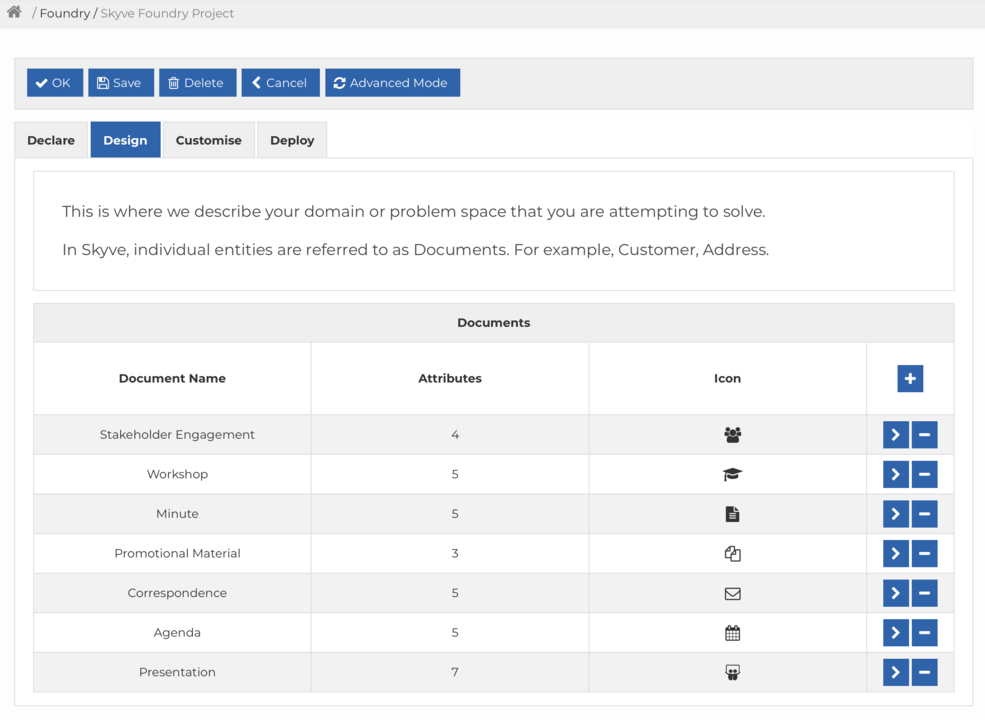
I had the opportunity today to test a new product that we have been developing in an initial requirements meeting with a client. Working with a limited budget, we were trying to run an Agile project but the attendees were getting confused with some of the technical jargon like Epic (our fault).
After half an hour of good discussion but no real progress, I suggested we try a different approach when someone asked what the final product might look like. “Let’s build it now and see” I prompted.
Read MoreSkyve Script is a new abbreviated way to declare a no-code application - using the markdown standard to allow developers to specify domain models.
Read MoreIn this three part series, I’ll discuss the latest big move in software development and what it means for you and for digital transformation generally.
Read MoreSkyve 20180515 is now available, this was another structural change which is hopefully the last for a while. Generated factories in src/generated/java are now no longer created reducing lines of code in the project. These have been replaced by the new DataBuilder() helper. FactoryExtension classes are now just Factories as well. This release also introduces Spring Security and no longer depends on Wildfly for authentication.
This release contains quite a few enhancements to reporting in Skyve, as well as more work on SAIL. Some bugs were squashed along the way.
Read MoreSkyve version 20180212 added the ability to define customer scoped roles. While Groups and Roles allow user permissions to be managed at the module level, some applications have permissions which span multiple modules and the permissions need a way to be linked to function correctly (e.g. a user may have incomplete access to application features if module permissions were not correctly applied to their account). To address this, a customer scoped role can be defined in the customer.xml which allows roles to be aggregated together into something coherent and cross module.